
2.1 Preparing for Boarding
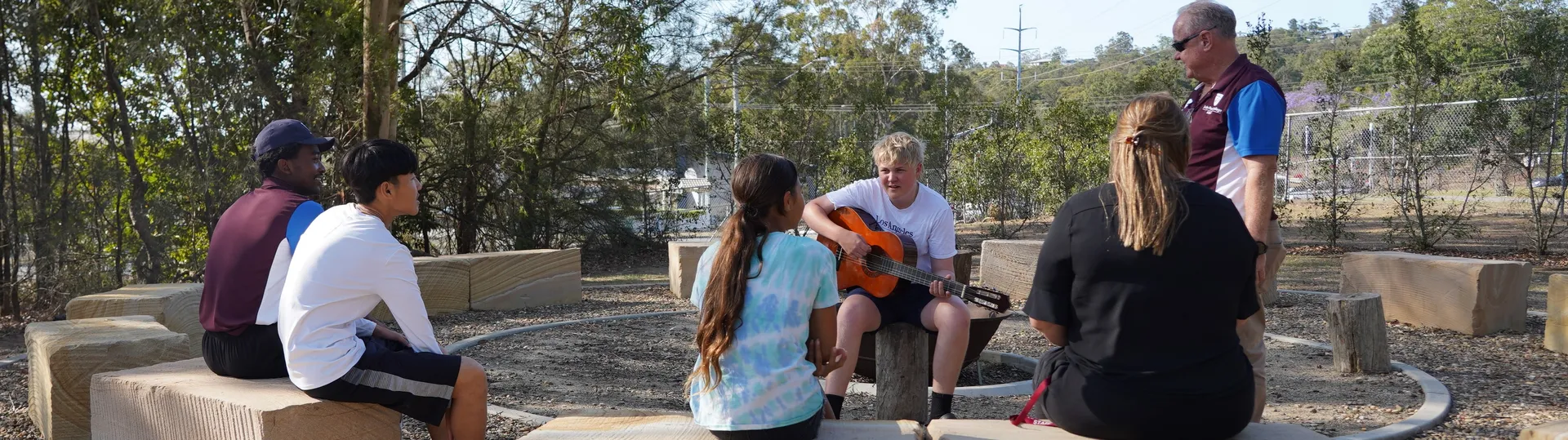
Preparing to live away from home is an exciting and, at time, daunting prospect. Living in Boarding is a communal way of living.
2.2 What to Bring and What Not to Bring
To help students move into Boarding, we have created What to Bring to JPC: Students in Accomodation. This document details uniform, clothing, personal items and what not to bring.
2.3 Boarding Life and Routines
Full details of Boarding Routines and adjustments to these routines can be found in Boarding Routines.
John Paul College Boarders experience their day through routines which are designed to promote positive social, emotional and academic outcomes. A boarding environment uses routines to maintain consistent expectations and provide boarders with a structure to demonstrate personal management and care.
Variations may be implemented in response to specific situations.
2.4 Term Time Daily Routine Overview
Weekday Routine Monday to Friday
- Students wake up at 7:00am and are expected to be at school by 8:00am
- Breakfast, lunch and dinner are provided at set times throughout the week, with late meals available to students participating in co-curricular activities.
- Study Sessions are provided throughout the week to support students academically.
Weekend Routine Friday to Sunday
The weekend routine enables students to participate in co-curricular activities and enjoy downtime after a busy week.
- A later wakeup call.
- Breakfast, lunch and dinner are provided at set times, with late meals available to students participating in co-curricular activities.
- Study Sessions and a look towards the week on Sunday evenings.
- Weekend activities available.
2.5 Boarding Activity Calendar
The boarding activity calendar can be viewed through REACH.
Boarders are required to sign up to activities each week by 9pm on Tuesday. If boarders miss this deadline, they go on to a wait list for the activity.
Boarders attending an activity will receive a confirmation email from the Student Services Officer the following day.
2.6 Secondary Co-curricular and Secondary Extra-curricular Activities
Boarders have a unique opportunity to embrace the many pathways and co-curricular options the College provides.
Sport and Performing Arts are integral to a holistic John Paul College education and promote important values such as teamwork, commitment and perseverance.
These values reflect our SOARING model, and we will actively encourage our boarders to participate in the many performing arts ensembles, sports and activities available.
Our comprehensive performing arts program is dedicated to excellence. Through orchestras, ensembles, rock bands, choirs, cheerleading, dance companies and drama, we nurture talents, practise to perfection and create unforgettable experiences for every student. For more information, see Performing Arts | Secondary | JPC.
Our extensive and diverse sports programs have a proud and long history of success and contribution to the TAS competition. We offer all students the opportunity to participate, and those with aspirations for further success are encouraged and supported to pursue representative sporting pathways to realise their dreams. For more information, see Co-Curricular Sports | Secondary | JPC.
The College provides boarding bus transport for Secondary Co-curricular Sports and Activities, including Saturday TAS fixtures and events forming part of the College's co-curricular program. This is School-Arranged Transport.
Where transport cannot be provided by the College - due to bus availability, scheduling conflicts, medical appointments, emergent individual student needs, or other operational requirements - families may be asked to assist, including by coordinating transport with another student's family.
For personal leave and Secondary Extra-curricular Sports and Activities not organised by the College, boarders must arrange their own transport (Student-Arranged Transport) to and from the venue with an Approved Host.
Boarders and families should refer to the Yearly Sport and Activities Summary on MyJPC to confirm whether an activity is classified as Secondary Co-curricular (School-Arranged) or Secondary Extra-curricular (Student-Arranged).
2.7 Requesting School-Arranged Transport
- Boarding staff coordinate School-Arranged Transport for Secondary Co-curricular Sports and Activities, including Saturday TAS fixtures, based on the fixture and activity schedule.
- Where School-Arranged Transport is not available for a scheduled activity, boarding staff will notify the boarder's family as early as practicable and, where appropriate, assist in coordinating transport with another student's family.
2.8 Requesting Student-Arranged Transport
- The boarder's family arranges transport with an Approved Host for personal leave and Secondary Extra-curricular Sports and Activities.
- A leave request must be submitted and approved through REACH prior to departure, regardless of the transport type used.
- Boarders aged 16 and above may use a taxi service with prior parent approval recorded through REACH, at the family's cost. Rideshare services are not permitted for any boarder under 18.
From 1 January 2027, boarders aged 15 and above may travel independently by public transport (bus), subject to REACH approval and the 6:00pm curfew as set out in the in the Boarding Leave Policy and Procedure.
Where a family is genuinely unable to arrange transport, a written request for boarding staff assistance may be submitted to boarding@jpc.qld.edu.au, with a minimum of 12 hours' notice. Assistance is not guaranteed and will be assessed on a case-by-case basis.
2.9 Room
Room tidiness is not negotiable! Your child will need to make their bed daily and ensure that their desk and floor are clear of any items to allow our cleaning staff to come through daily and maintain their personal space. Waste bins need to be emptied each day, and any food items should be in airtight containers.
3.0 Shared Areas
Each boarder is responsible for ensuring that the tidiness of our shared common room areas, passageways, mini kitchens and bathrooms is always up to an acceptable standard. Boarders will occasionally be asked to do their part in cleaning these areas, and we expect that they will also contribute to its upkeep in addition to utilising the space.
3.1 Breakages, Damage and Personal Belongings
Breakage of or graffiti to any article or equipment in the boarding house must be reported to staff immediately. The cost of repairing or replacing boarding house equipment deliberately damaged by students will be charged to parents' accounts. When allocated to a room, boarders must immediately notify staff of any existing damage or graffiti to avoid confusion regarding responsibility. No materials are to be draped over lights due to potential fire hazards. Insurance to boarders' property is strongly recommended that parents check their insurance policies to ensure adequate personal items coverage. The college does not accept responsibility for expenses arising from loss of or damage to personal effects and property.
3.2 Laundry
John Paul College students take immense pride in wearing Burgundy and Blue, and as such, the laundering of clothes is paramount to meeting College standards of dress and appearance.
All clothing items must be clearly marked with the boarder's name, and it is best done with a laundry marker or sewn-on name labels.
Parents and guardians can purchase labels from a range of suppliers; here are some recommended websites:
My Name Label: http://www.mynamelabel.com.au Stuck on You: http://www.stuckonyou.com.au Tinyme: www.tinyme.com.au
As part of the broader boarder development program, John Paul College has embraced the concept that young people take a hands-on approach to organise their daily needs, including laundering their clothes. The Village has excellent facilities for students to wash, dry and iron their clothing. Our stand-alone laundry building houses six washing machines and dryers.
Doing laundry is another skill that boarders will develop to help them become independent adults. Of course, we will provide assistance when required.
When boarders commence their boarding journey, our professional staff will assist with every effort to establish a washing routine for every boarder. Be assured that boarding staff will monitor and help with laundry daily to ensure our boarders look their best.
3.3 Technology Devices and Internet
Devices
Boarders in Years 7 to 10 are required to hand in all devices each evening. This requirement is in place to:
- Support consistent and healthy sleep routines
- Reduce night-time distraction and screen exposure
- Provide appropriate supervision of technology use in the boarding environment
The following devices must be handed in each evening:
- Mobile phones
- Laptops
- Additional devices, including iPads and other tablets
As part of the College's Gradual Release of Responsibility policy, boarders are exempt from the evening device hand-in requirement from Semester 2 of Year 10 onwards. This reflects an increasing level of trust and independence as students prepare for the expectations of Senior Boarding.
Dummy Devices — A Breach of Policy
Handing in a dummy (decoy) phone in place of the student's actual device is considered a serious breach of the technology rules, regardless of intent. This includes any inoperative, disconnected, or substitute device presented in place of the student's genuine phone.
Where a student is found to have handed in a dummy phone, the following consequences will apply:
- The dummy phone will be confiscated and held in the boarding safe for the remainder of the Term.
- The student's actual phone will be confiscated for a period of one fortnight.
- Parent/guardian contact will be made to advise them of the breach and the consequence applied.
While the student's phone is confiscated, the following exceptions apply as a safety precaution:
- The student will be permitted to have their phone for approved outings.
- The student will be permitted to take their phone to and from school.
- When at Fenton Village, the student is required to hand in their phone on arrival, consistent with the standard evening hand-in procedure.
Internet Usage
The entire boarding village is wirelessly networked, enabling boarders to connect to their school account and internet services. Boarders are afforded an additional data allowance to assist in studying, researching, and communicating with home or family.
The school network is a secure and safe place for boarders to access online content; there is no need for any personal Wi-Fi hotspot or similar devices to be used in the Village. After 11.30pm each evening, the network is limited to web browsing and email only; this ensures that boarders can continue studying and completing academic tasks - the Student Use of Mobile Phones Policy. Boarders are required to follow the Responsible Use of Technology Agreement.
3.4 Leave and Travel Arrangements
Full details of Boarding Leave and Travel arrangement can be found in the Boarding Leave Policy and Procedure.
Parents and students are requested to submit leave applications through REACH 12 hours in advance. This will enable staff time to assess and approve the request.
The JPC Boarding Leave Policy applies to all boarders and is an important part of ensuring students remain safe under our duty of care. A consequence will be issued to any boarder who breaches the policy, so it is important that all boarders follow the rules when entering leave and abide by the relevant return curfew times when out on leave.
Boarders are expected to travel to and from Fenton Village on specified Boarder Travel Dates - available on the JPC Website.
3.5 Homestay During Holidays (Optional)
All boarders are expected to vacate Fenton Village for vacation periods.
Overseas boarder parents are encouraged to arrange holiday care through guardians, family, or agents. If this is not possible, the College may assist with holiday homestay arrangements. However, there is limited availability.
3.6 Communication and Engagement with Families
Communication is critical to the successful operation of any boarding facility. This is particularly true regarding leave or when boarders are unhappy or require support with some aspect of boarding life. Please refer to the Leave Process in Boarding Routines.
If boarders are dissatisfied, they should first raise their concerns with boarding staff to solve the problem. If the issue still needs to be resolved, they should contact the Head of Boarding.
REACH (online leave management system) should be used by parents who wish to provide details regarding leave for their child and add or remove Approved Hosts for their child.
Boarding staff will assist with boarder welfare issues, boarding operational matters, medical appointments, and information regarding boarder progress.
Boarding staff will assist with medical and health-related issues and should be contacted if a boarder has reported feeling unwell or before booking external appointments.
3.7 Medical and Critical Information
John Paul College is committed to providing an excellent Boarding experience that ensures the safety and well-being of students. Medical and Critical Information is collected, stored and used during admission and enrolment.
Medical information is any information related to an individual's health status, medical conditions, treatments and medications, and medical history (including physical and psychological).
The College has procedures for collecting, updating, storing and using student critical information. This information is collected, stored and maintained in boarding through Reach.
- Parents are required to complete a full critical information update annually at the start of every school year
- Every six months, the College will provide an opportunity for parents to communicate changes to critical information with the College
- Parents can provide updates about critical information at any point in time
- Only parents/legal guardians can update critical information
- Language support may be offered by staff, where appropriate, to support.
Critical information includes information the College considers essential to provide appropriate welfare arrangements for a student.
- Parents' home address, phone number and email address
- Students' Australian mobile number
- Student medical information (including historical information as required)
- Emergency contact information
- Consent to administer medication, including Over-the-counter (OTC) medication and Prescription Medication.
The medication administration in Boarding is as per the College JPC Medication Administration Policy. Parents and students should read this carefully. OTC and prescription medications can only be administered by Boarding as per this policy. In summary, current consent from parents is required for OTC and prescription medications. Prescription medication must be in the original packaging with a label.
Action Plans or Individual Care Plans for allergies, asthma, anaphylaxis or other conditions must be current and provided and discussed before entering Boarding.
Consent is sought from parents/legal guardians for a healthcare professional or designated school staff member to provide a student with medical treatment and care. This includes any tests, medicines, treatments or procedures agreed to. In general, if a person is under the age of 18 years, their parent or guardian gives consent on their behalf. However, there are some cases where young people under the age of 18 can give consent. To give informed consent, students/parents need to be given enough information about options to make decisions about healthcare.
Routine Medical Appointments
Dental appointments and visits to a general practitioner are best made during school breaks with parents. Boarding will support these routine medical appointments if they cannot be avoided during school term.
All boarders are expected to have money available to pay for any medical expenses incurred. The College cannot pay for appointments, medical treatments or pharmaceuticals.
Medical Appointment Transport
- Boarders should seek medical advice from boarding nursing staff in the first instance, available on site daily from 7:00am to 12:00pm.
- Where nursing staff book an appointment, they will also arrange the boarder's transport.
- Where a boarder books their own appointment outside nursing hours without first consulting boarding staff, the boarder's family must arrange transport with an Approved Host, and a leave request must be submitted through REACH.
JPC Health Centre - On Campus
Students may present at the College's Health Centre from Monday to Friday, 8.00am to 3.30pm. In addition, a Boarding Nurse is available in the mornings on weekdays. Boarding Staff will help students receive the care they need outside these hours.
John Paul College is located a short distance from several medical centres. These facilities are our point of call for boarders requiring non-urgent medical consultation.
Illness
When a boarder presents as unwell, Boarding Nursing staff or Boarding staff first screen for exclusion indicators. If none of these are present, the boarder is not excluded and must attend school as normal, presenting to the College Health Centre if symptoms develop or worsen during the day.
Excludable Illness
If one or more exclusion indicators are present, the Boarding Nurse determines whether the illness can be safely managed without full isolation or is critical enough to require it.
Where the illness is manageable, the boarder remains at Fenton Village under the ongoing care and monitoring of the Boarding Nurse and Student Service Officer in the Health Centre, not in their rooms. Technological devices are to be handed in, so that the boarder can focus on recovery and rest. Parents will be kept well-informed throughout this process. Regular updates will be provided.
Boarders requiring full isolation will be withdrawn from residing in their villa and relocated into an isolated sleeping and living space in the Fenton Village Health Centre. This is located adjacent to the Boarding Administration and Reception building. If this is not suitable due to the boarder's illness, the boarder should be placed into the care of the nominated Emergency Contact person. In consultation with the boarder's GP, the Head of Boarding will coordinate this event and inform the boarder's parents. The Head of Boarding will organise these arrangements in consultation with their parents and emergency contact person.
Visit the Time Out website for the recommended minimum exclusion periods for infectious diseases in schools (based on the National Health & Medical Research Council Guidelines). Note: The NHMRC recommends that physically unwell children be excluded from attending the College.
Medical Emergencies
In an emergency, students will be taken to Logan Hospital, which has a 24-hour Accident and Emergency Department. Boarder parents or guardians will be contacted immediately if a boarder requires an ambulance and/or hospitalisation.
Mental Health
On occasion, a boarder may present with a mental health issue. If this is the case, the parent/guardian will be contacted by the Head of Boarding to discuss the sequence of events. The Boarding Village may also seek assistance/guidance from the College counsellors and Health Centre staff regarding decision-making and management. Depending on the severity and frequency of the issue, the College and Boarding Village will work with the family and health professionals to devise and follow a Health Management Plan.
If the Boarding Village does not have the resources to manage a mental health issue, the boarder involved may be asked to seek alternative accommodation until they are assessed as ready to return to the Boarding Village. The Boarding Village and the College will work with the student and their family to ensure a smooth transition back to the boarding house. To enable this transition, a health management plan must be in place. This may necessitate that the student continues to seek assistance from health professionals.
3.8 Behaviour Management
John Paul College Boarders are expected to demonstrate the College values, adhering to the JPC Our College Values and Expectations during time in Boarding.
Every boarder takes personal responsibility for their own development by diligent and careful preparation for, and participation in, Boarding life and activities. Mutual respect requires all to be conscious of the needs of others and how our actions may affect other.
Full details of behaviour and consequences can be found in the Boarding Behaviour Management Policy.
Boarding staff are addressed minor breaches of behaviour such as disruptive or uncooperative behaviour. More serious behaviours are dealt with by the Head of Boarding.
3.9 Boarder Uniform and Personal Appearance
Boarding students are expected to adhere to the Uniform and Personal Appearance Policy. During non-school time in and out of Boarding, the Free Dress Guidelines of this policy apply to Boarders.
Respectful Relationships and Appropriate Dress
Living alongside others is a privilege that depends on mutual respect. Students are expected to dress appropriately whenever they are in shared spaces, including common rooms, dining areas and the grounds. This shows consideration for their peers, their villa mates and staff, and helps everyone feel comfortable and safe in Fenton Village.
Sleepwear, including pyjamas, is for private spaces only. Students must not wear pyjamas outside their villa and should be fully dressed in appropriate clothing before leaving it. When sharing a room, students should also be mindful of their roommates' comfort and privacy, such as by changing in the bathroom or with consideration for others.
Our College values of mutual respect and compassion guide how we treat one another. By dressing appropriately and being considerate of those we live with, students help build a caring and respectful community.
4.0 Boarding Security and Emergency
John Paul College has Emergency Procedures for fire, evacuation and student emergencies.
Students receive emergency procedure education at the start of every term.
A fire drill and lockdown drill are conducted every term.
Fenton Village is a secured community monitored by CCTV 24/7. Access to the Village is through the front gates, which require boarders to scan their student ID cards.
Some residential boarding staff live on-site, providing active supervision and are on-call overnight.
Personal valuables are the responsibility of the owner. Sums of money and technology items (iPhones, iPads, headphones, etc.) must be carefully maintained and secured in the lockable cupboards when not required.
Large sums of money, beyond pocket money, are optional. It is best practice for boarders and parents to use bank key cards and online banking to manage large amounts of money. If a boarder has a reason to have cash, they should hand it to the Head of Boarding for safekeeping.
4.1 Catering and Nutrition
Boarders are expected to be prompt and attend all boarding meals as scheduled in the Fenton Village Weekly Routine. Mealtimes are a time to catch up with friends, peers and staff and enjoy a nutritionally prepared meal in a family setting. We appreciate feedback regarding this important aspect of boarding life, and as such, we conduct formal and informal surveys throughout the year. Please refer all dietary matters to the Head of Boarding. During the week, lunches are supplied at The Piazza (canteen).
Every effort is made to cater to special dietary conditions. Late Meals will be provided as required.
4.2 Student Drivers
Senior students wishing to drive to Boarding must submit a completed application form and a copy of their driver's licence to the Head of
Boarding for approval. A new application is required each year.
Once approval has been granted, student drivers must lodge car keys with their Head of Boarding immediately upon arrival at the College. The use of boarder cars must be in accordance with the Boarding Leave Policy. Boarders cannot drive to school.
Becoming an Approved Legal Student Driver
- A boarder wishing to keep and operate a private vehicle while at the College must obtain written approval from the Head of Boarding before doing so.
- The boarder must submit a completed Application for Approval, together with a copy of their current driver's licence, to the Head of Boarding.
- A new application, including a current copy of the licence, must be submitted and approved each year. Approval does not carry over between years.
- The boarder must sign a Student Driver Declaration Form, and the boarder's parent/guardian must sign a corresponding Parent Declaration, confirming both parties understand and accept the expectations and rules governing student drivers.
- Once approval is granted:
- the student driver must lodge their car keys with the Head of Boarding;
- car keys may only be collected immediately prior to departing on leave, and only where a leave request has been submitted and approved by both the parent/guardian and the boarding team.
- The vehicle must remain parked in Cec Munns carpark when not in use.
- Misuse of a private vehicle, or of student driver privileges, will result in the privilege being revoked at the discretion of the Head of Boarding.
Transporting Siblings or Other Boarders as a Student Driver
- Where a student driver's family wishes for the driver to transport their own siblings, written confirmation from the family must be provided to the Head of Boarding.
- Where a student driver wishes to transport any other boarder (not a sibling) at any time, written permission must be obtained in advance from the Head of Boarding and from the families of both the driver and the intended passenger(s).
- This consent remains on file with the Head of Boarding and applies to future trips with the same student driver, subject to the leave request requirements.
- A leave request must be submitted through REACH by both the student driver and each boarder being transported, and approved before travel occurs.
4.3 Use of Taxi Services
Boarders aged 16 and above may use a taxi service (non-rideshare), with prior parent approval recorded through REACH, and the expense being met by the family.
4.4 Rideshare Services Are Not Permitted
Rideshare services (for example, Uber and DiDi) are not an approved transport method for any JPC boarder under the age of 18. This reflects the legal requirement in Australia that a minor may not travel in a rideshare vehicle unaccompanied. This restriction applies regardless of the purpose of travel or the distance involved.
4.5 Students Aged 18 and Over in Boarding
Turning 18 brings new freedoms and new responsibilities. Under Queensland law, adults may lawfully consume alcohol in appropriate settings. However, boarding students aged 18 and over remain members of the College community and of the boarding household, and the expectations below apply to every boarder regardless of age. These expectations are grounded in the Our College Values and Expectations policy.
Our Expectations
In line with the Substance Misuse: Alcohol, Drug and Tobacco policy, the College maintains a 'no tolerance' policy towards the use or possession of tobacco, alcohol or any other illegal drug or substance by students on the campus, at any College activity or while wearing the College uniform. For boarders, this includes the boarding residence and any time a boarder is on leave and returning to, or representing, the College.
- Being 18 does not change these expectations while a boarder is living in boarding, on campus, or at College activities.
- Boarders must not bring alcohol or other substances into the boarding residence and must not return to boarding under the influence.
- Where a boarder has parent or guardian approval to go out on leave, the boarder is expected to act safely, make responsible choices and return at the agreed curfew time.
- Behaviour or conduct in a social context that brings the reputation of the College into disrepute, and which is brought to our attention, may also have serious consequences.
Shared Responsibility
Parents and guardians share the responsibility of keeping students safe when they are beyond the College's direct supervision. We ask families to talk openly with their young adult about these expectations before leave is approved, and to consider carefully the leave they authorise.
This text is from the Boarding Handbook in SharePoint. It was last copied on 2 November 2026.